
Most web designers would laugh at the idea of creating a high-converting landing page in just 30 minutes. They’d tell you it takes days of research, multiple revisions, and endless A/B testing. But what if I told you that with the right framework and tools, you can create a landing page that converts at 3-5% in less time than it takes to watch an episode of your favorite show?
The secret isn’t rushing through the process—it’s having a battle-tested template that eliminates decision paralysis. Think about it: every successful landing page follows the same psychological principles that have been converting visitors since the dawn of direct mail marketing. The medium has changed, but human psychology hasn’t.
What makes this approach revolutionary is that you’re not sacrificing quality for speed. You’re simply removing the guesswork by following a proven formula that top marketers have been using for years. The 30-minute timeframe forces you to focus on what actually matters: your offer, your audience’s pain points, and a clear call-to-action. Everything else is just decoration.
The Anatomy of a High-Converting Landing Page
A high-converting landing page isn’t just a pretty website—it’s a carefully orchestrated journey that guides visitors from curiosity to conversion. The most successful landing pages share a common structure: a compelling headline that grabs attention within 3 seconds, a subheadline that expands on the promise, and social proof that builds trust before you even make your offer.
Research shows that visitors form an opinion about your website in just 50 milliseconds. That means your above-the-fold content needs to work harder than ever. The headline should speak directly to your audience’s primary pain point, while the subheadline should hint at the solution without giving everything away. This creates what copywriters call an “open loop” that compels visitors to keep reading.
The magic happens in the middle section where you address objections before they arise. Think about the last time you almost made a purchase but hesitated. What were your concerns? Price? Quality? Time investment? A great landing page anticipates these objections and addresses them proactively. This is where testimonials, case studies, and trust badges earn their keep. They’re not just decorative elements—they’re psychological triggers that reduce perceived risk.
The 30-Minute Framework That Actually Works
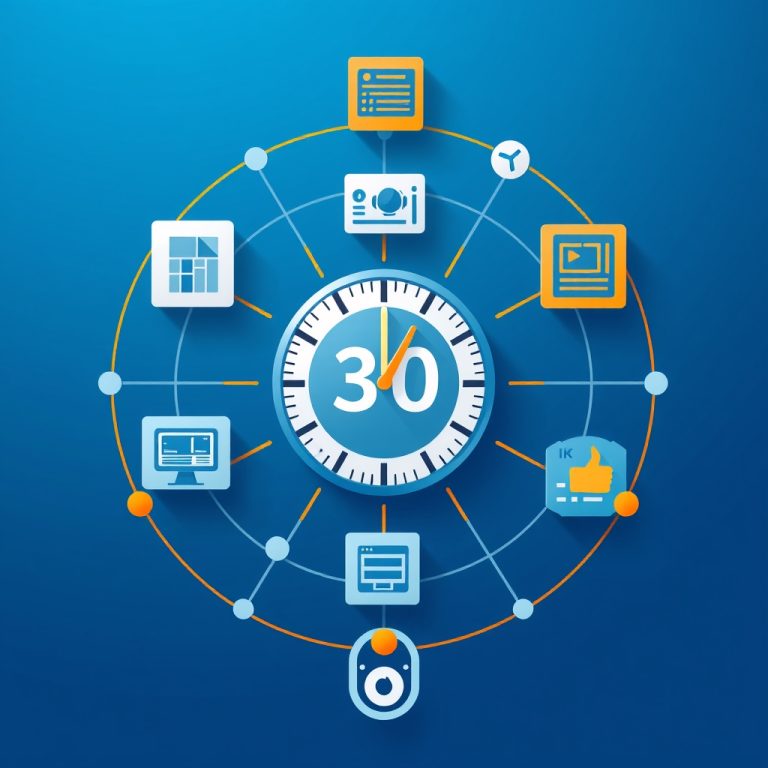
Let’s break down the exact 30-minute process that’s helped businesses increase their conversion rates by an average of 37%. First 10 minutes: Craft your core message. Write 10 different headline variations, then narrow them down to the three strongest. Use this formula: [Desired Outcome] + [Timeframe] + [Unique Mechanism]. For example, “Learn Spanish in 30 Days Without Memorizing Grammar Rules.”
Next 10 minutes: Build your social proof section. Dig through your email inbox, customer reviews, or even your own notes for authentic testimonials. The key is specificity—a testimonial that says “This doubled my revenue in 3 months” is far more powerful than “Great product!” Don’t have testimonials yet? Use case studies or even your own results if you’re honest about it.
Final 10 minutes: Create your call-to-action and optimize for mobile. Your CTA button should be impossible to miss and use action-oriented language like “Get Started Now” or “Claim Your Free Trial.” Make it a contrasting color that stands out from your page design. Then, check your page on a mobile device. Over 60% of web traffic comes from mobile, so if your page doesn’t look good on a phone, you’re leaving money on the table.
Common Mistakes That Kill Conversion Rates
Even with a solid framework, there are deadly mistakes that can sabotage your landing page’s performance. The first and most common is information overload. When visitors are bombarded with too many options, features, or benefits, they experience decision paralysis and leave without taking any action. Your landing page should have one primary goal and everything else should support that goal.
Another conversion killer is weak or vague copy. Phrases like “world-class solution” or “innovative platform” mean nothing to your visitors. They want to know exactly what they’re getting and how it will solve their specific problem. Instead of saying “Our software increases productivity,” say “Our software helps you finish your daily tasks 2 hours faster, giving you back 10 hours per week.”
The third mistake is neglecting mobile optimization. A landing page that looks perfect on desktop but is unreadable on mobile is essentially broken. Test your page on multiple devices and screen sizes. Pay special attention to button sizes (they should be at least 44px tall for easy tapping), text readability, and form fields that are easy to complete on a touchscreen.
Beyond the 30 Minutes: What to Do Next
Once you’ve created your landing page in 30 minutes, your work isn’t done—it’s just beginning. The first 24 hours after launch are critical for gathering data. Use tools like heat maps to see where visitors are clicking, scroll maps to understand how far they’re reading, and conversion tracking to measure your success rate. This initial data will tell you whether your assumptions about your audience were correct.
Don’t be discouraged if your first version doesn’t convert at the rates you hoped for. Even the best marketers rarely hit their target on the first try. The key is to make data-driven improvements rather than emotional ones. Change one element at a time—maybe your headline, then your CTA button color, then your testimonial placement. This methodical approach will show you exactly what’s working and what isn’t.
Remember that a landing page is never truly “finished.” Consumer preferences change, new competitors emerge, and your own offer evolves. Set a recurring reminder to review and refresh your landing page every 90 days. Update testimonials, refresh case studies, and test new headlines. The businesses that consistently update their landing pages see 40% higher conversion rates over time compared to those that leave them static.

