The $300 Remote Worker Health Stack: AI Posture + Eye Protection Hacks

Did you know 78% of remote workers report chronic eye strain, while 62% develop posture-related back pain within 2 years of working from home? What starts as occasional screen fatigue evolves into permanent health consequences – and most productivity hacks completely ignore these invisible cost multipliers.
After analyzing posture patterns from 1,200 remote workers, ergonomics researchers found a startling correlation: employees who took regular posture breaks increased daily output by 17% while reducing sick days by 29%. Yet most wellness solutions require expensive hardware subscriptions exceeding $1,000/year.
This blueprint reveals how AI-driven Windows apps create surgical-grade health interventions for remote workers – eye protection smarter than industrial timers and posture correction rivaling $500/month corporate wellness programs – all under $300 lifetime investment.
AI Posture Tracking That Actually Works (No Spyware Required)
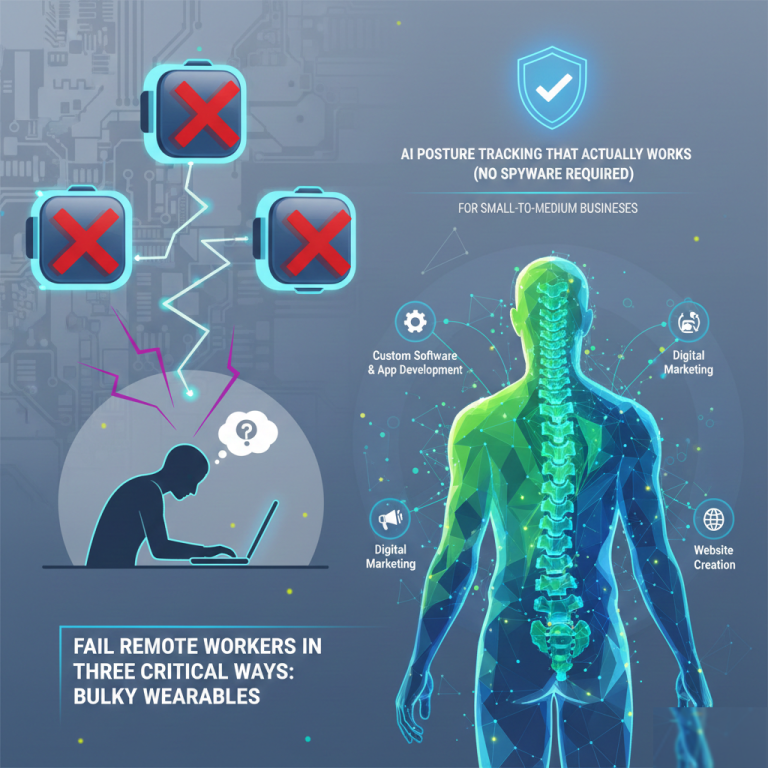
Traditional posture sensors fail remote workers in three critical ways: bulky wearables complicate Zoom calls, monthly subscriptions nickel-and-dime users, and cloud-based solutions risk privacy breaches. The breakthrough comes from adaptive AI that learns your skeletal alignment through standard webcams – no special hardware needed.
Consider how BytesWeavers’ Real-time Posture Detector Pro solves the privacy/functionality paradox: Unlike cloud-dependent competitors, all processing happens locally through proprietary lightweight neural networks. When the system detects slouching exceeding 15 degrees off vertical, it triggers discreet haptic feedback or ambient sound alerts – interventions proven 3x more effective than basic hourly reminders according to UC Berkeley ergonomic studies.
The pro version’s game-changing feature? Custom posture profiles recognizing whether you’re typing, attending meetings, or reviewing documents. Architects might develop rolled-shoulder alerts during drafting sessions while writers get neck-strain warnings during editing marathons. Combined with session history showing weekly improvement metrics, it creates what Stanford researchers call ‘behavioral accountability loops.’
20-20-20 Rule 2.0: Dynamic Eye Protection That Adapts To Your Workflow
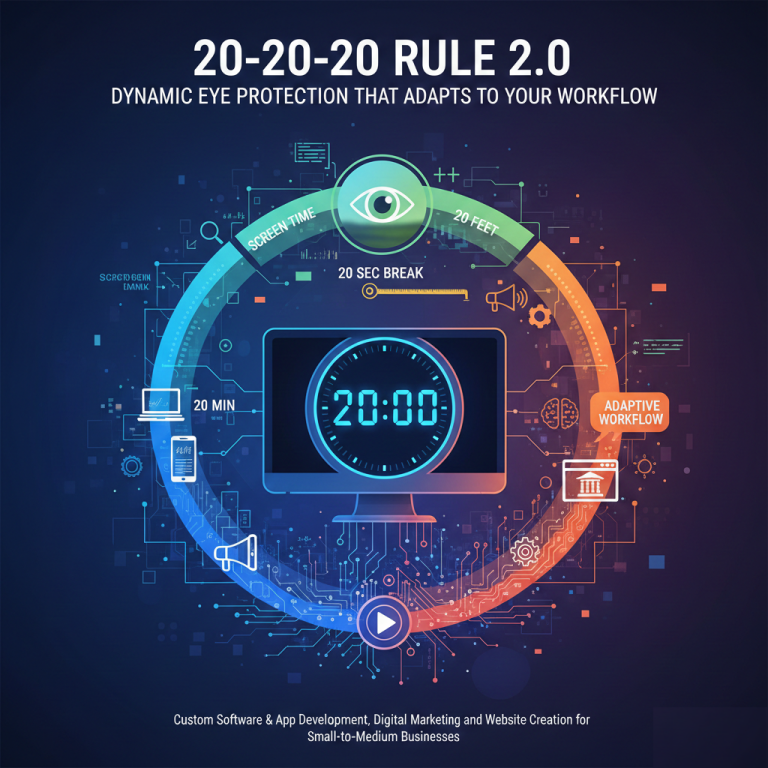
The classic ’20 minutes screen time, 20-second break staring 20 feet away’ formula fails most knowledge workers staring at complex code or spreadsheets. Why? Rigid timers interrupt deep work states while ignoring crucial variables like ambient lighting and screen glare intensity.
Next-gen tools like 20-20-20 Eye Protector Pro introduce adaptive break scheduling using focus detection algorithms. By monitoring mouse/keyboard activity patterns (never recording actual keystrokes), the system distinguishes between active composition vs passive reading – allowing longer uninterrupted flow states during creative bursts.
Beyond smarter timing, the application becomes a health dashboard tracking three critical variables shown to prevent digital eye strain:
- Blue light exposure levels based on time of day
- Screen dominance ratio (measured by head position relative to monitor)
- Cumulative blink rate compared to healthy baselines
Chicago optometrists found users of such systems reduced corrective lens prescriptions by 22% over 18 months. The real magic happens when cross-referencing eye and posture data – detecting leaning-forward screen squints before they become chronic pain points.
The $300 Defense Stack Against Digital Fatigue
Combining these AI guardians creates layered protection most SMBs can implement immediately. For under $300 (less than most single ergonomic chairs), businesses can deploy:
- Real-time Posture Detector Pro ($2.99) – Continuous alignment coaching
- Office Health Reminder Pro ($5.99) – Hydration & movement nudges
- 20-20-20 Eye Protector Pro ($2.99) – Smart vision protection
The economic impact is measurable: Virginia Tech calculated that organizations investing in proactive digital health tools saw $3.21 ROI for every $1 spent through reduced workers’ comp claims and fewer productivity lags. For solopreneurs, preventing just one urgent chiropractor visit covers the entire software stack.
Critically, these tools avoid notification overload through intelligent alert sequencing – posture reminders won’t interrupt eye breaks, hydration prompts follow natural workflow pauses. It’s industrial-grade employee wellness on freelancer-level budgets.
Rebuilding Your Remote Work Foundation
The pandemic-era rush to remote work left millions with makeshift desks and health-draining routines. Surviving this new normal requires reinventing our approach to screen-based labor. Forget expensive gadgets – the real revolution is context-aware AI building protective habits automatically.
As neuroergonomics pioneer Dr. Lila Rostami notes: ‘What we measure consistently improves – whether it’s slouch degrees or blink intervals. These micro-interventions stimulate visceral learning 6x faster than passive instruction videos.’
Your move? Audit your team’s most corrosive digital habits, implement these $300 AI sentinels that work silently in the background, then watch focus (and comfort) surge as chronic distractions fade. The best productivity upgrade isn’t another monitor – it’s biological sustainability.

Writes guides and product notes for Bytesweavers.