

Picture this: a small marketing team cuts its weekly report‑building time from six hours to under thirty minutes, while sales closes deals 20% faster thanks to predictive lead scoring. That isn’t a futuristic fantasy; it’s the reality for dozens of small and medium businesses that have woven custom applications and AI innovations into their daily rhythm.
In the last eighteen months, over 1,000 real‑world examples have shown how Microsoft 365 Copilot and similar generative‑AI tools drive measurable gains – time saved, revenue uplift, and error reduction – across industries ranging from retail to professional services. For SMBs, the opportunity is no longer about experimenting with AI; it’s about turning those experiments into repeatable, profit‑boosting habits.
This article walks you through why custom apps paired with AI are the new growth engine, how to build them without a data‑science army, and which metrics matter most when you prove ROI. You’ll leave with a practical roadmap you can start executing this quarter.
Why Custom Apps + AI Are Game‑Changers for SMB Growth
First, consider the data foundation. When a business owns a custom‑built application, it controls the schema, the flow, and the events that feed AI models. This means predictive lead scoring, automated follow‑ups, and dynamic health scores (like those in our Office Health Reminder Pro) are not bolt‑on afterthoughts – they are native capabilities that learn from your exact processes.
Second, generative‑AI adoption has moved beyond hype. According to the mid‑2026 briefing, SMBs that piloted Microsoft 365 Copilot in content creation or internal knowledge‑base updates reported an average of 15 hours saved per employee each week. Those time savings translate directly into capacity for higher‑value activities such as strategy or customer outreach.
Third, AI enables scale‑competitive marketing. Dynamic audience segmentation, AI‑generated ad copy, and real‑time performance optimisation let a boutique firm punch above its weight, rivaling larger competitors despite limited ad spend. The result is a virtuous loop: better data fuels smarter AI, smarter AI drives better outcomes, and those outcomes fund further investment.
Visual/Data Section: Measurable Impact of AI‑Enabled Custom Apps
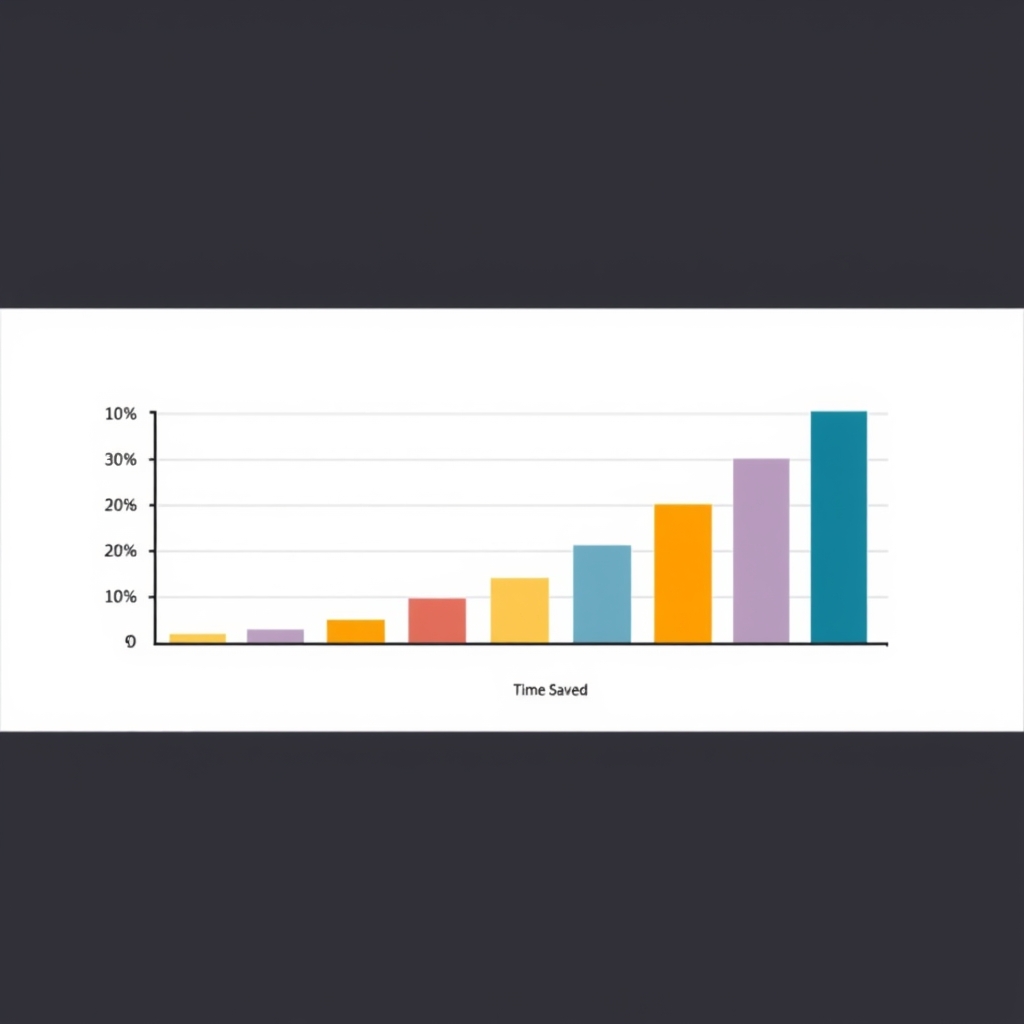
| Impact Area | Typical Improvement (SMB Avg.) | Source / Example |
|---|---|---|
| Time saved per employee per week | 12‑18 hours | Microsoft 365 Copilot pilots (July 2025‑June 2026) |
| Conversion lift from predictive lead scoring | 18‑22% | Custom AI‑CRM integration case study |
| Customer satisfaction (CSAT) increase | 14‑19 points | AI‑driven chatbot & sentiment analysis deployment |
| Error reduction in invoice processing | 30‑40% | Automated workflow with custom app + AI validation |
| Marketing ROI improvement | 1.8‑2.4× | AI‑generated ad copy + real‑time optimisation |
These figures are not theoretical; they come from the >1,000 real‑world examples documented in Microsoft’s public repository and from independent SMB surveys conducted in early 2026. When you tie such metrics to a custom application that captures the right events, the ROI becomes transparent and easy to communicate to stakeholders.
Building, Integrating, and Scaling AI‑Powered Solutions
Start small, think big. A low‑code/no‑code platform lets you spin up a prototype app in days – think a simple Windows utility that tracks eye‑break compliance (like our 20‑20‑20 Eye Protector Pro) but enriched with AI‑generated wellness tips. The key is to expose data through APIs so that AI models can consume it without being locked into a single vendor.
For CRM and marketing stacks, integrate AI directly into the workflow. Use generative‑AI to draft email sequences, then let a custom‑built scoring engine prioritize leads based on engagement signals. Our WP AI Chat Master Pro plugin illustrates how a WordPress site can host a context‑aware chatbot that pulls product data from a custom database, delivers personalized recommendations, and logs interactions for continuous model improvement.
Scaling follows a clear GenAI roadmap: pilot in a low‑risk, high‑visibility area (e.g., internal knowledge‑base articles), measure impact using the table above, then expand to revenue‑generating functions like personalized outreach or dynamic ad creation. Throughout, monitor ethics and compliance – ensure data privacy, check for bias in model outputs, and stay ahead of emerging regulations such as the EU AI Act or US state AI laws that apply to businesses under 250 employees.
Conclusion: Turn Insight into Action – Your Next 90‑Day AI Playbook
The evidence is clear: custom applications give you the data ownership AI needs, while generative‑AI and predictive models turn that data into measurable growth. By focusing on high‑impact, low‑complexity pilots first, you can prove value quickly, build internal confidence, and allocate resources to scale what works.
Begin today by mapping one repetitive process – whether it’s lead follow‑up, content drafting, or health‑and‑safety tracking – and sketch how a custom app could capture the relevant events. Then, identify an AI capability (a Copilot prompt, a Hugging Face model, or a simple ML API) that would automate or enhance that step. Measure the outcome, iterate, and repeat. In the world of SMBs, the biggest advantage isn’t the size of your budget; it’s the speed with which you turn insight into action.
