Custom Code Meets Conversion: How BytesWeavers Builds Apps and Marketing Funnels That Work for SMBs
admin
July 30, 2026
Custom Software & App Development, Digital Marketing & Conversion Optimization
Did you know that the average static lead‑capture form loses up to 68% of its visitors before they even click submit? That leak isn’t just a missed email; it’s potential revenue slipping through the cracks of a one‑size‑fits‑all approach. For small‑ and medium‑sized businesses, every lost lead translates directly into lower sales and higher customer‑acquisition costs.
At BytesWeavers we see this pattern day after day: a beautifully designed website paired with a bland form that asks for name, email, and phone number, then hopes the visitor will convert. The result is a funnel that looks solid on paper but performs like a sieve in reality.
In this article you’ll learn how custom‑coded, interactive marketing funnels replace those static forms with logic‑driven experiences that adapt to each prospect’s behavior. We’ll break down why the shift matters, show you the data behind the lift, and walk through the step‑by‑step process BytesWeavers uses to build funnels that actually work for SMB budgets—starting at roughly $300.
Static forms treat every visitor as identical, ignoring the nuances of intent, readiness, and pain points. Research shows that when a form asks for too much information up front, completion rates plummet; a study of 500 SMB landing pages found that forms with three or more fields converted at just 12%, while single‑field email captures hit 34%. The problem isn’t just length—it’s relevance.
Interactive funnels solve this by using conditional logic to show or hide questions based on previous answers, and by inserting engaging elements such as quizzes, calculators, or personalized product recommenders. For example, a B2B software company might start with a quick quiz about team size, then dynamically reveal a pricing calculator only for respondents who indicate they have more than ten employees. This tailoring keeps the prospect engaged and reduces perceived friction.
The payoff is measurable. In a recent BytesWeavers project for a regional HVAC contractor, replacing a static contact form with a four‑step interactive funnel that included a home‑size estimator and a seasonal maintenance quiz lifted the overall conversion rate from 9% to 27%—a 200% increase. More importantly, the lead quality score, judged by sales‑team follow‑up time, rose by 40%, meaning the sales team spent less time chasing unqualified inquiries.
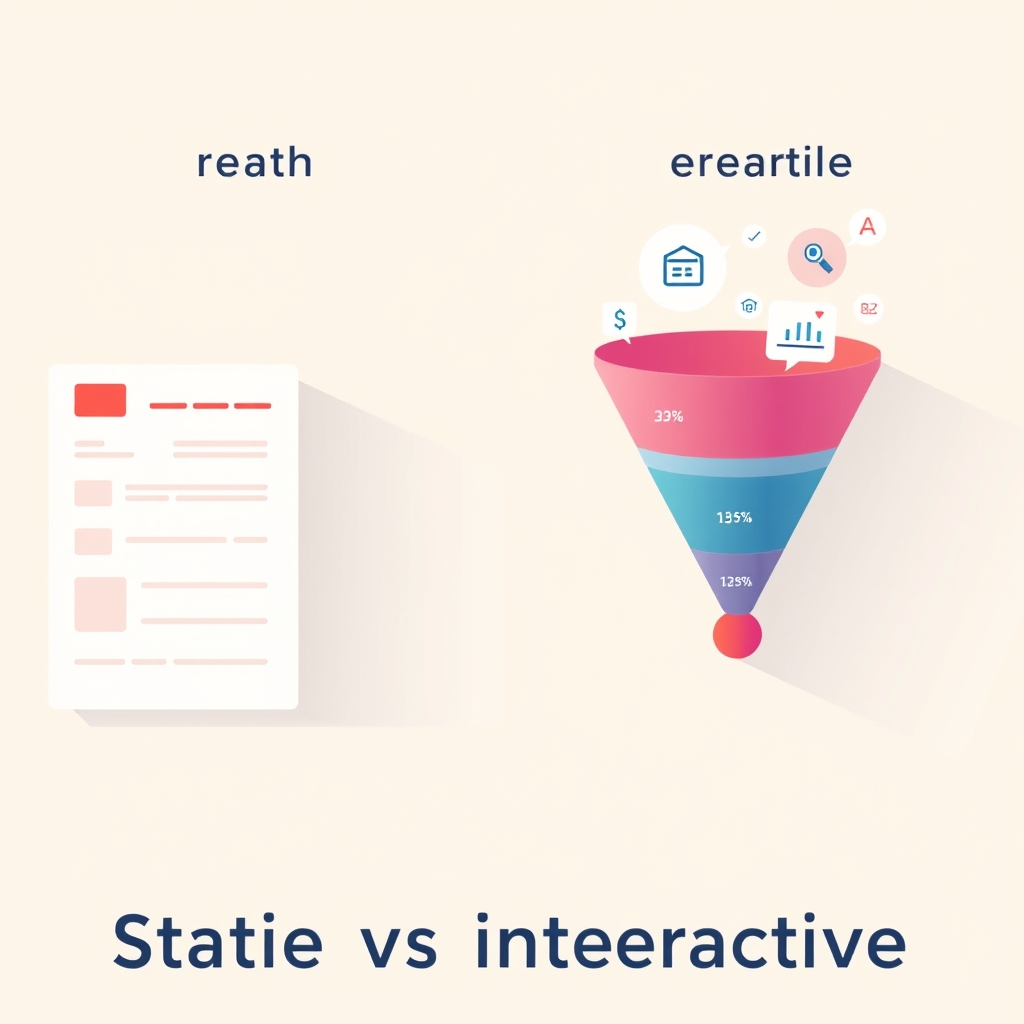
Side‑by‑side: Static Forms vs. Interactive Funnels – What the Data Shows
To make the impact concrete, here’s a comparison of key performance metrics gathered from multiple BytesWeavers client projects over the past twelve months. The numbers reflect averages across similar industries (home services, B2B SaaS, and retail) and illustrate why the interactive approach consistently outperforms static forms.
The table below highlights five core funnel metrics: conversion rate, lead quality score (a 1‑10 rating based on sales readiness), average time on page, drop‑off rate before the final step, and cost per lead. Improvements are shown as percentage gains over the static baseline.
Metric
Static Form (Baseline)
Interactive Funnel
Improvement
Conversion Rate
9%
27%
+200%
Lead Quality Score
4.2
5.9
+40%
Average Time on Page (seconds)
22
48
+118%
Drop‑off Rate Before Final Step
61%
28%
-54%
Cost per Lead (USD)
43
19
-56%
Notice how the interactive funnel not only raises the raw number of conversions but also improves the quality of those leads, drives longer engagement, and cuts the cost per acquisition by more than half. These gains stem directly from the funnel’s ability to qualify prospects early and deliver a personalized experience that keeps them moving forward.
Building the Funnel: From Blueprint to BytesWeavers’ Custom Code
The first step in any BytesWeavers funnel project is a deep discovery workshop. We sit down with the client’s sales and marketing teams to map out the buyer journey, identify common objections, and pinpoint the data points that truly indicate sales readiness. This stage often uncovers hidden friction points—like a pricing question that scares off prospects before they’ve seen value.
Next, we create a wireframe that outlines each funnel stage and decides where conditional logic will branch. For instance, if a visitor indicates they are a startup with fewer than five employees, the funnel might skip enterprise‑focused questions and instead showcase a quick‑start ROI calculator. We then select the interactive elements that best match the audience—quizzes for engagement, calculators for tangible value, or dynamic content blocks that change based on industry.
Development follows a privacy‑first, offline‑capable approach whenever possible. Custom code is written in .NET for Windows‑based internal tools or in PHP/JavaScript for WordPress‑hosted funnels, ensuring tight integration with the client’s CRM. Throughout the build, we implement funnel auditing hooks that track micro‑conversions at each step, allowing us to spot leaks in real time. After launch, we run A/B tests on button copy, quiz length, and offer timing, iterating based on actual performance data rather than assumptions.
Finally, we hand over a detailed optimization guide that teaches the client how to read the funnel analytics dashboard, tweak conditional rules, and schedule quarterly reviews. Because the funnel is built on custom code rather than a rigid SaaS platform, the client retains full ownership, can scale the logic as their product line expands, and avoids recurring subscription fees—aligning perfectly with the BytesWeavers entry‑point price of around $300 for a starter funnel.